Review: Halo: New Blood

Halo: New Blood
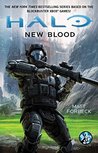
Halo: New Blood by Matt Forbeck
My rating: 5 of 5 stars

One of the best Halo novels I’ve read in a long time; maybe even my very favorite. It helps that it’s a story about one of Halo’s most likeable side characters: Sergeant Buck, originally from ODST, and now a squadmate in Halo 5. Buck is voiced and modeled by Nathan Fillion, an iconic figure to geeks everywhere and his character is basically a pitch-perfect translation of Malcolm Reynolds moved into the Halo universe. And it works perfectly.

Author Matt Forbeck either has the uncanny ability to mimic those around him, or he binged on Firefly episodes and Fillion’s other work while writing this book. You can hear Fillion’s voice in these pages and it’s excellent. The story itself is very human and focuses on the themes that make the Halo universe the most compelling: duty, identity, loyalty.

The story is told out of sequence, which is interesting as it creates a strong sense for how Buck (the main character and narrator of the story) thinks. We get a quick recap of the plotline of ODST, which is interesting, check in with some old comrades (which is interesting and also heartbreaking), and see how exactly Buck transitioned from ODST to Spartan-IV.

The best aspect of this story, however, is that it succeeds where almost all franchise tie-in novels fail: you don’t have to be a Halo fan to enjoy this book. It stands on its own; if you’ve never played a Halo game, you can still enjoy this story. It doesn’t rely on the reader having a degree in its own lore; if you’ve never played a Halo game, you’ll understand the difference between ODSTs (elite, but thoroughly human) and Spartans (human supersoldiers) and even the different classes of Spartans.

Most of all, it’s a human, character driven story. The ending, which I won’t spoil here, really did catch me off guard and caught me right in the feels. That’s a rare achievement for most books focused on space wars and future soldiers, let alone a video game novel.

View all my reviews

The Trouble With Long Books

I read for a lot of reasons. One of the stranger reasons I read is because of how much I like entering my reading into my Goodreads profile. You enter the books you’ve read, when you’ve read them, give them a rating and a review (if you want). Basic social media stuff, but that’s now why I love it; I love it because of what Goodreads does with all that data after you enter it.

I love how the data get arrayed out into neat bars and stats based on how many books you’ve read in a year, how many pages, when you’ve read the book versus when it was published, and what the longest book was that you read for that year. Basically, these are stats for a nerd, the way a baseball player might be concerned with improving his batting average or a runner might want to improve her best times. Suddenly, I want to read so I can fill my bars and I want to read a lot, all the time, even if I don’t really feel like it because I have to keep filling those bars. This is also the neurotic motivation I have for gathering Achievements for my Xbox Live gamertag, incidentally.

And hey, as long as it all motivates one to read more books, what’s the problem?

Well, the problem is that when you set a reading goal for the year, and if you really focus on hitting it, you very quickly turn into a mercenary about what you’re reading. Sure, you could be reading Infinite Jest right now (which I am) and it could strike you was one of the best books ever written (which, thus far, it does) but it still only counts for one book. It’s over a thousand pages long yet it only moves my “books read” bar up by one tick. It’s over a thousand goddamn pages. I could read three average novels in the same time period!

There was one month (May 2013, according to Goodreads) where I did nothing but read Shogun by James Clavell for almost the entire month! And sure, it was one of the finest books I’ve ever read in my life and absolutely compelling, but an entire month was spent on one book! What about my bars? I have bars to fill.

Sure, there’s the fact that the graph also tracks the longest book that you’ve read, but that also has a flaw: what’s the point of reading a thousand page book if you’ve already got a 1100 pager on that graph? I have Neal Stephenson’s Anathem sitting patiently in my “to read” stack, but what’s the point? That shit only clocks in at a mere 937 pages, which makes it too long for me to stay on track with my monthly book goal, but too short to make “longest book of the year that I read.”

So, what, I’m left with the joy of reading? Maybe I want to marvel at a masterpiece of speculative fiction from a writer who cosistently delivers interesting and intelligent work that always impresses me? Maybe I just want to read something great for the joy of reading?

Fuck that, man. I got bars that need fillin’.

I Still Prefer Books (And Science Agrees With Me)

There’s probably something odd in blogging about the superiority of the physical page as compared to the digital screen. I don’t particularly love eBooks; as I have enumerated before, I don’t own a tablet or eReader of any sort so my experience is limited to reading on my smartphone. And that’s not terribly enjoyable.

Overall, I’d estimate that out of the 125 books I read last year, about 100 of them were physical, 20 were audio, and the remaining five were electronic text.

Fortunately for me, science suggests that from a neurological perspective, this is the preferred way to read:

The debate between paper books and e-readers has been vicious since the first Kindle came out in 2007 . . . But now science has weighed in, and the studies are on the side of paper books . . . A 2014 study found that readers of a short mystery story on a Kindle were significantly worse at remembering the order of events than those who read the same story in paperback. Lead researcher Anne Mangen of Norway’s Stavanger University concluded that “the haptic and tactile feedback of a Kindle does not provide the same support for mental reconstruction of a story as a print pocket book does.”

My own experiences support this. I recently finished Neal Stephenson’s Cryptonomicon and I read it entirely on my smartphone. I noticed one particular advantage: my book was always in my pocket which otherwise wouldn’t be possible given that Cryptonomicon, like almost everything Stephenson writes, is around 1,000 pages. I was able to read pretty much everywhere I went which really helped rack up some extra reading time throughout the day.

But I can tell that I didn’t absorb it as fully as if I’d been reading a physical version. It’s easier to skim on a screen. You scroll through the text and “psuedo-read” what’s there, seeing without comprehending.

As we increasingly read on screens, our reading habits have adapted to skim text rather than really absorb the meaning. A 2006 study found that people read on screens in an “F” pattern, reading the entire top line but then only scanning through the text along the left side of the page. This sort of nonlinear reading reduces comprehension and actually makes it more difficult to focus the next time you sit down with a longer piece of text.

I noticed the “F pattern” creep into my reading experience. It certainly didn’t help my comprehension, even if it did improve the speed at which I plowed through the book (but since I’m reading for my own pleasure, what’s the point of going so quickly that you don’t realize what you’re doing?)

I also noticed that the “F pattern” effect began to recede as soon as I returned to a physical book. My focus was much sharper.

I have another mammoth Stephenson tome sitting in my “to-read” pile (Anathem, if you’re curious) and it will be interesting to see how the experience compares; two very long works by the same author on the different formats.

Textual Preferences

I don’t own an e-reader but I do indulge in reading e-books on my smartphone from time to time. I use the word indulge which might suggest that ebooks are a treat that I allow myself from time to time but that isn’t quite the case. Usually, I’ll choose an e-book when the printed copy isn’t available. Or I need something immediately such as during travel.

Otherwise, reading on my smartphone is an uncomfortable experience. The phone’s screen is too cramped and claustrophobic. My phone is three years old, so prolonged use of any sort wears out the battery too quickly.

It creates a tricky situation. I don’t like reading ebooks enough to invest in a dedicated ereader but reading on my phone is too uncomfortable to induce me to read more ebooks, so why should I spend money on a reader?

However, there is one case when I feel the e-book has a clear advantage, even on an uncomfortable platform like a smartphone: when one is reading a doorstopper.

The current doorstopper in my reading queue is Cryptonomicon, by Neal Stephenson. I tried reading a few years ago but I couldn’t get into the book. I knew that it wasn’t a bad book. It just wasn’t the right time or place or maybe I wasn’t in the right mental state for it. I always knew that I’d come back to it someday and so, a few years later, here I am.

I’m trying it as an e-book so that I don’t have to heft around a massive slab of book which is a bonus when you’re a motorcycle rider and your reading material needs to fit easily into one’s jacket pocket.

Since this is my first really deep delve into reading an e-book, I’m learning some of the quirks. One of which is that I can control the color of the text on the screen. I can choose to have black text on a white background (like this blog page) or I can have the inverse; white text on a black background.

I’ve tried it both ways for about one hundred pages now and I’m uncertain. My general feeling is that the white-text-on-black would probably be better for my battery life but which one is better for my eyes?

A few Google searches suggest that black-text-on-white is more readable which would reduce eyestrain, but there are also countless articles about computer-related eyestrain that make me suspicious of the black-text-on-white paradigm. Might the inverse option be better for the eyes? I am uncertain and there doesn’t seem to be much discussion on this pressing topic to provide me with more information.

Winter Is Coming Much Too Quickly (And Also Not Quickly Enough)

The first season of Game of Thrones premiered on April 17, 2011 while A Dance with Dragons, the fifth book in the series, was released on July 12, 2011. A Dance with Dragons was published six years after the last book, A Feast for Crows. Almost immediately after the release of book five, we nerds began doing the math.

The first two seasons of the HBO show clocked in at one book per season. Things slowed down by season three, which didn’t quite make it through the third book. But even if book three lasted for two seasons and that trend continued with books four and five, that still only gave us seven years at most until the HBO show caught up to the books.

In actuality, that number is probably less due to the way the stories in books four and five are structured. It’s likely that they won’t be able to do two seasons per book (which would give us four seasons’ worth of content total.) If we assume that books four and five will be covered in two seasons’ worth of show, that drops our time estimate down to five years from the start of the show until it overtakes George’s writing. Considering how long A Dance with Dragons took (six years) and the fact that even if book six generates two seasons worth of show, that doesn’t leave much time for George to write book seven. In fact, it’s looking increasingly likely that the show is going to overtake the books and it’s something that Martin himself is aware of:

In the new Game of Thrones feature in Vanity Fair, Martin confesses that the show is catching up to his writing speed,something he had sworn wouldn’t happen. Says Martin, “They are. Yes. It’s alarming.” (Already, our panel of experts has speculatedthat season five, airing next year, could end with events from The Winds of Winter, the book Martin hasn’t finished yet. Warning: link contains spoilers.)

But now that the danger of the show catching up to Martin’s books seems more extreme, the producers have gotten Martin to spill way more detail about how he intends to end the story for every single major character.

I’m a book fan first and a show fan second. I love the show, I love the spectacle and the acting and the music and all the entertainment that comes out of a great television production, but A Song of Ice and Fire is still a book series and in my opinion, it deserves to be completed first as a book series.

I think it would be heartbreaking if the HBO show eclipses the books and we find out how the story ends not from the pen of the man who’s been working for almost two decades to bring it into the world, but from the notes passed along to the show’s creators.

It would damage my enjoyment of the books considerably if the show already revealed what happened first. That’s not something that happens when you’ve read the books first. When you’ve read the book first, it’s fun to see how the show actualizes the characters and the world that exist in your mind. It’s less fun when the book itself starts to become an afterthought.

Something like that happened with Dexter. How many people even knew that Dexter was based on a book? Probably not many. Even worse, the show completely outclasses the book series that it’s based on. It feels like the author is trying to play catch up with his own television version. This analogy might not hold true to Game of Thrones since I believe that Martin is a superior writer who has created a superior story, but I’d also argue that Game of Thrones is a superior show to Dexter in its own right, which makes for stiffer competition against its parent material.

Really, there’s only one thing that I can suggest, one bit of advice I have for George on how he can keep our nerd hearts from getting broken and it’s advice that, conveniently enough, has already been set to music:

Should Rowling Stop Writing? Spoiler: NO

A writer named Lynn Sheperd has committed the cardinal sin of speaking out against one of the gods of writing: J. K. Rowling. Even more shocking, Shepherd did it in public, where other people could hear (or read) her!

Audible gasp!

The rules of talking about the gods of writing have always been thus; if you’re a writer, you CAN criticize the gods of writing, but only if you are also a god of writing. Thus, Stephen King can talk trash about Rowling (although he’s on the record as generally loving her). James Patterson can talk trash about Stephen King (although actually it’s the other way around).

Here’s Shepherd’s reasoning for why Rowling needs to stop after unleashing the Casual Vacancy and the Cuckoo’s Calling on the publishing world:

It wasn’t just that the hype was drearily excessive, or that (by all accounts) the novel was no masterpiece and yet sold by the hundredweight, it was the way it crowded out everything else, however good, however worthwhile. That book sucked the oxygen from the entire publishing and reading atmosphere. And I chose that analogy quite deliberately, because I think that sort of monopoly can make it next to impossible for anything else to survive, let alone thrive. Publishing a book is hard enough at the best of times, especially in an industry already far too fixated with Big Names and Sure Things, but what can an ordinary author do, up against such a Golgomath.

I believe that I understand what Shepherd is talking about, if only because I remember the seething jealousy I used to feel when I was getting into writing myself.

It wasn’t just about comparing myself to every other person I met who told me “I’m a writer” or “I’m working on a novel” or whatever; comparison was part of it, the worry that their writing was better than mine. It was a competitive sort of hate, a feeling that every time one of my fellow neophytes managed to score a publishing deal, they weren’t just succeeding on their own merits. No, my seething jealousy was due to the fact that I believed they were sucking up publishing contracts that were rightfully mine.

Never mind the fact that I wasn’t submitting my work to the same market or the same agent or the same publisher. In my logic (and I use that word loosely), there were a finite number of book publishing deals in the world and every time someone else succeeded, it made my own chances go down. Even though it’s technically true that there are only a finite number of publishing deals in the world, my reasoning is still flawed and I was silly to have believed such a thing.

Fortunately, I’ve gotten over this particular mental peculiarity as I’ve gotten older.

Shepherd feels that writers like Rowling “suck the oxygen out of the room” via the sheer impact Rowling’s work makes when it arrives on the scene. Any other poor book that’s out there at the same time is capsized by the waves made as Rowling’s gorilla jumps into the pool. And maybe this is true for those books published right around any of the behemoths unleashed by the gods of writing.

On the other hand, do we want to see a publishing world without the gods of writing? Rowling might not be good for those first-time authors trying to get noticed, but she is DAMN good for the health of the publishing industry as a whole. Names that get people to remember why they like books and why they like to buy books are names that get people into the stores or onto Amazon or whatever. Simply put, without Rowling (and those like her), publishing as a whole suffers.

The general public has a notoriously fickle attention span and I don’t think a publishing world filled with nothing but scrappy up-and-comers is going to be enough to remind the consumer why he or she likes to buy books. The best case scenario is when the consumer heads to the bookstore (or the library!) for the new Rowling (or Patterson or King) and picks up the new title by their favorite and also decides, “hey, this other book looks interesting” and adds it to their stack.

I used to do this all the time as a kind when I’d roll into the bookstore with my $50 gift card.

I don’t actually agree with Shepherd that Rowling is bad for new writers. I happen to believe that evolutionary pressure applies to writers and their work, and if you’re writing into a market dominated by gods, that inspires you to dig deep and create the very best book you can manage. But even if Rowling is bad for first-time writers, she’s good for the health of publishing as a whole. I’ll happily deal with a turbulent month of sales (or even a torpedo in my own book deal, whenever that finally happens) if it means one of the gods is out there reminding people while it’s still cool to buy books.

Finishing Books After I’ve Decided I Dislike Them

If you take a look at my Goodreads page, you’ll notice that I’ve had a book on my “currently reading” list that I started in December. It’s not a particularly long book, so it really shouldn’t have taken me this long to finish it. Except that it’s not very good and I’m not really enjoying myself. I’ll save the particular reasons for my review; that’s a thing I’ve started doing since several people informed me that they were actually interested in what I thought about particular books, instead of just the star rating. Imagine that! To be honest, I’m still trying to get used to the idea that people pay attention to the things I do here. I know I’m posting in a public space, but for the most part, I still tend to assume that I’m talking to myself.

Anyway, back to the books.

I try not to abandon a book once I’ve started reading it, even if it’s bad. Of course, I don’t always hold myself to this ideal and there are several books that I’ve abandoned over the years. But they are decidedly in the minority and even if a book isn’t very good or even just overwhelmingly mediocre, once I start, I feel compelled to finish. I’m not sure why this is. Is it due to some sort of feeling of professional responsibility to other authors? “You wrote this thing, so the least I can do is give you the courtesy of reading it all the way through before I render my judgement?”

Maybe it’s just stubbornness? Or some sort of weird OCD compulsion that only manifests in reading tendencies? I’m certainly not OCD in any other aspect of my life. The current state of my apartment can attest to that.

Regardless, I’ve books on my reading stack that I really want to get to, but I feel compelled to finish the ones that I began first. Even if I put them off for several months in the process, it seems. I wonder if anybody else does this?

The Potential Dilution Of The James Patterson Brand

Even though it’s trendy for bibliophiles to take potshots at James Patterson’s quality as a writer, that’s not what this post is going to be about. Regardless of one’s opinion of his writing, the man is a tremendous supporter of public libraries and reading in general. He’s donated money for scholarships and for awards to institutions to help encourage the love of reading. I may not care for his work but I respect his contributions to literacy and the love of reading. Honestly, albeit unrelated to my main point, Patterson does come off as much more of a classy guy than Stephen King does when the latter snipes at the former:

In an interview for USA Weekend, Stephen King referred to Patterson as “a terrible writer [but he’s] very successful”.[13] Patterson said of King in a Wall Street Journal interview, “he’s taken shots at me for years. It’s fine, but my approach is to do the opposite with him—to heap praise.”[14]

Though I don’t have a strong opinion on the quality of his writing, I do have a few thoughts on his prolific output and what it might mean for the future of his career. This opinion is informed pretty much entirely by my experiences working in a public library and conversing with several dedicated Patterson fans.

Patterson is one of those writers that I consider to be a brand unto itself. He’s not the first writer to do this; Tom Clancy turned his name into a brand years before his death. You knew what you were getting when you picked up a Tom Clancy book, whether it was one of his Jack Ryan novels or one of the series that were ghostwritten under his name: Op Center, Netforce, and Splinter Cell are the ones that come to mind first, although I’m sure there are others. Regardless, when you pick up a Tom Clancy book, you can expect a political/military thriller of some kind. It’s what people who read Tom Clancy want. It’s why they read him.

Originally, you could say Patterson fit into this same brand identity, albeit as a more general thriller. This is the advantage of the Patterson brand: if you like thrillers, you can reliably pick up books with his name on them because they’re going to be thrillers of some sort.

Scoff if you like, but this is a reliable way to sell books. Here’s why. Most readers don’t want to venture too far out of their comfort zone. I’m not being dismissive of this tendency. For many people, free time is at a premium. The time one has to spend reading is valuable and there’s nothing worse than spending that valuable, precious, limited time on a book that you’re going to hate.

You might only have enough time to read four or five books a year. Me, I try to pack in around 100 or so a year, but I have the kind of life and the kind of work situation where I can do that. I can read for an hour every day on my lunch break. I can read for a few hours when I get home because I don’t have kids or pets that require much attention. Not everybody has that kind of time.

Thus, if you’re a reader with limited time to spend on books, you’re more likely to stick with something you know you’ll enjoy. You pick up a Patterson because he always entertains. It’s a safe investment for your reading time.

The scope of the Patterson brand is growing. It’s also changing. In addition to his thrillers, he’s writing YA fantasy novels. He’s writing humorous novels about kids in middle school. He has a picture book. Romance novels. Crime novels. Some nonfiction.

You can’t look at the Patterson brand and expect to pick up a thriller anymore. And I have to wonder: is that a good thing?

Is the value of the brand harmed when the brand identity is diluted? Patterson’s strength is his prolific output and the fact that his name on the cover sells books. What if that output becomes so vast that readers with limited time/funds/attention lose what made him an attractive option? If you can’t trust the Patterson brand to deliver what you want, you won’t pick up a book or trust a book that’s carrying his name. That weakens the ability of the Patterson brand to sell books.

The widespread nature of what Patterson’s name has been attached to is also potentially weakening to the strength of the brand as a whole. While authors often like to spread their wings and try different things, few authors have ranged as widely in subject, theme, and appropriate age level as Patterson. Stephen King readers would likely not pick up a Stephen King book for their middle schooler, but Patterson has a few YA series. Do readers of his YA series also want to read his adult novels? Do parents reading his adult novels want their kids reading the adult books after finishing his YA fare? It’s hard to say.

Ultimately, I perceive a potential future where Patterson’s name is put on too many things and it loses its value to readers. Already, I hear rumblings from some of our more dedicated Patterson readers coming into the library. They can tell which books have his actual writing and which books are a ghost writer working from the man’s outlines and style guides (or at least, they think they can tell). It doesn’t matter if they’re right, because if that’s what they’re thinking, it’s already going to affect their browsing habits. If the Patterson brand loses its ability to promise entertainment, they’ll turn to different authors until they find someone who fills that need for reliability.

James Patterson isn’t going anywhere, not when he’s sold over 260 million books. He alienate thousands, perhaps hundreds of thousands, of readers and still bring home a nice paycheck.

But could the success of his own brand turn off some of his dedicated readers? Could he become a victim of his own success? It’ll be interesting to watch and see what happens.
My “You’re Not An Introvert” Moment Of The Day

I’m an introvert. That should be obvious based on the fact that I’m writing on a blog rather than discussing this in a social context. If you’re wondering how I rationalize my writing out thoughts I know are going to be read by other people, mostly I do it by ignoring the fact that I actually have readers. In my mind, I’m always talking to myself.

Susan Cain’s book Quiet: The Power of Introverts in a World that can’t stop Talking was one of the best books I’ve ever read. It helped me understand and reconcile two very different aspects of my personality. I recommend the book to everybody I know, both introverts (in order to better understand themselves) and extroverts (to better understand those of us on the opposite end of the spectrum).

The book club that meets at my library is going to be discussing Quiet at next month’s meeting, so we have a large stack of copies at our information desk for people to check out. For the most part, people are either interested in the book or else have already read it. Today, though, I had a little exchange that really raised my eyebrow (and to be honest, a bit of my ire):

Person: “Is this next month’s book club book?”

Co-worker: “Yeah, it’s about introverts.”

Person: “Oh, I can’t stand introverts. I really can’t stand them. I don’t like them at all.”

Me: “Well, you know, I’m an introvert.”

Co-worker: “So am I.”

Person: “NO, you’re not. You’re not introverts.”

Me and co-worker: (speechless silence)

Person: “I don’t like introverts at all, because they don’t hold up their end of the bargain in a conversation. You have to do all the talking. I don’t like that.”

Me: “I’m actually a very introverted person.”

Person: “You’re not. You always talk to me.”

Me: “Yes, well, that’s sort of my job. I’m considerably less social on my own time.”

Person: “Well, I don’t think you’re an introvert. You’re not.”

Me: “You’re right. I’m glad you know me so well. Anyway, you should read the book. It’s a great way to understand more about introverts.”

Person: “I don’t want to read that. I don’t care about understanding introverts. I don’t like them.”

And scene.

Also? Sigh.

On The End

“The death then of a beautiful woman is unquestionably the most poetical topic in the world.”

Poe wrote that.

Most agree that he knew what he was talking about.

It’s a little bit different for me.

For me, the beauty and melancholy of reaching the end of a truly amazing story is the most poetical topic in the world.

It is bittersweet in a way that reality cannot match. You find yourself mourning your loss, though what you lost is a world that never was and people that do not exist but in your mind. You are mourning something that never really was part of Reality. And none will ever share what you feel, because even if they read your story, even if they feel as passionately as you feel, they will not be mourning the same story. They will mourn only their version of it. And their version is not yours.

You will mourn your story alone in your own thoughts, your life enriched by its integration into yourself and yet also diminished, as though you gave too much of yourself to a place only you can ever tread.