Review: Sword of Destiny

Sword of DestinySword of Destiny by Andrzej Sapkowski
My rating: 4 of 5 stars

The Witcher series continues to be a breath of fresh air for the fantasy genre, which continues to be a supremely ironic thing to say considering this book was first published in 1992. This book continues the adventures of Geralt of Rivia, notable monster slayer and sorceress lover. The book itself is a collection of short stories as Geralt moves from one adventure to another, though these tales feel more connected than the stories from the previous book “the Last Wish.” In particular, we see how some of the biggest arcs of the Witcher storyline begin to take shape, especially the first meeting between Geralt and his Child of Destiny, Ciri (which was a hugely exciting moment considering Ciri’s role in the Witcher 3).

If there’s one thing about this book that I wasn’t crazy about, it’s this; I feel very much like I’m exploring this world without a road map, and not in a cool “let’s see what’s out there” way but in a “I feel like I’m missing something important here.” A lot of terminology isn’t explained and concepts and descriptions must be inferred from context, which is sometimes difficult considering the sparse, utilitarian writing style. It’s a problem with the previous book as well, honestly, but it didn’t bother me as much because even though it was the first book, I thought it might all be explained. Here, though, I was aware that despite having played one of the games, read two novels, and a graphic novel . . . there were still details that I didn’t quite follow.

That said, don’t overlook this book. It’s a wonderful fantasy world and everything about it and everyone in it are interesting and exciting. Most of all, however, is the fact that nothing about the Witcher feels like it’s in the long shadow cast by the Lord of the Rings. I have no idea if author Andrezj Sapkowski ever read Lord of the Rings, but even if he did, its influence isn’t here. Maybe it’s a product of cultural difference; the Witcher draws very heavily on its polish origins, but for an American reader, that creates a feeling of an entirely new world, something that isn’t easy to come by in the fantasy genre.

So, although I didn’t plow through this book with the reckless abandon of the first volume, I still enjoyed my time in Geralt’s world and I’m looking forward to the next book in the series.

View all my reviews

Review: The End of Nature

The End of NatureThe End of Nature by Bill McKibben
My rating: 5 of 5 stars

There are more comprehensive books about climate change out there. There are books with facts and models and hard science. There are scarier books, too, with more dire predictions about what will happen. It might seem hard to imagine what this little book’s niche actually is, its role in the ecologist’s reading canon, until you remember that it was written in 1989. It was written years before an Inconvenient Truth, years before Gore, years before Bush dismantled the Kyoto Protocol, and years before the age of global terrorism. It was a time when “global warming” was still more often referred to “the greenhouse effect.” This book was written in an entirely different era.

And for that reason alone, I feel it is required reading.

As author Bill McKibben notes in his new introduction (itself now ten years old, having been written in 2005), this book is a product of its time. It is uneven in places, alternating wildly between talking about the facts of global climate change and more poetic musings on the nature of, well, nature and humanity’s role within it. And yet it’s undeniably fascinating to look back on the state of environmentalism in the late 1980s and compare its predictions to what has happened in the almost 30 years since then. Unfortunately, there’s a strong feeling that we’ve been asleep at the wheel for too long. We knew about this stuff in the 1980s! How the hell did we late it get this bad?

And yet we’ve also seen some victories: Keystone XL, of which the author himself was a leading protester. Everyone knows about climate change now, even if many deny it. We’ve come along way from the fringe environmental movement, when this book was written. We still have a long way to go and it’s easy to feel despair, especially after seeing what we knew in 1989. Nevertheless, this book is a testament to environmentalism’s history and for that reason alone, it’s worth reading. Beyond that importance, it’s still a good read on its own merits; the idea of the end of nature might more accurately be described as the “end of wildness,” the end of nature as an untouched force, and regardless of whether or not you agree with the argument, it’s still interesting to consider.

View all my reviews

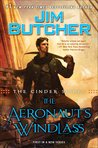
Review: The Aeronaut’s Windlass

The Aeronaut's Windlass (The Cinder Spires, #1)The Aeronaut’s Windlass by Jim Butcher
My rating: 3 of 5 stars

Man, I wanted to love this one. I was ready to love it. I was prepared for it. Consider the background context: Jim Butcher absolutely dominates my list of “Most Read Authors” at a lofty 26 books. I’ve read almost everything that’s flowed forth from his pen and I use the word “flowed” in the most enthusiastic and positive sense: the summer I was introduced to Dresden was a reading feast as I plowed through eleven books with complete abandon. I still remember where I was when reading “Summer Knight,” for instance (I was camping on a beautiful mountain in southern Arizona, if you’re curious).

I remember picking up the Codex Alera books and being skeptical at first, but Tavi’s story drew me in and to this day, I consider the entire Alera series Butcher’s most underrated masterpiece. Alera showed me that I don’t need urban fantasy and wisecracking wizard detectives to enjoy his work.

I started this book in January. It proved to be slow going for me. I’d read a bit and I’d enjoy myself . . . but there was no hook. I’d put the book down for a few days and a week or two would go by as I read something else. I tried changing things up by going with the audiobook version during my walk to work each day . . . but more often than not, I went with a podcast instead. Eventually, I returned to the physical version of the book, mostly so I could finish.

Where do things go awry? The meeting with the Spirearch felt like a poor version of the First Lord from the Alera series and my feeling was the entire thing about “I can’t trust my guard because maybe traitors” was contrived to explain why these untrained kids were being sent off on an important mission.

For how prominently the aeronauts and the ship Predator featured in the title and the opening chapter, it’s quite surprising how little the airships actually figure into the book. Predator spends most of the story docked, with the action on “land” as it were. This was unfortunate, because the Predator and the airships were the most interesting and exciting aspect of the world. The battle at the end is suitably thrilling, but it’s such a small section of the book that by the time it rolled around, I’d be working slowly through the book for almost two months.

Also, the title bothers me. My understanding is that a windlass (in this universe’s context) is basically a barge or a ship that’s slow and weak. But Grimm (the presumed aeronaut in question) never has his ship turned into a windlass, so . . . where exactly is the windlass referred to in the title?

Other problems with the plot included the sudden and abrupt disappearance of the main antagonist, to the extent that I went back and reread a few chapters to make sure I didn’t miss a brief mention of the antagonist’s demise. Turns out, that wasn’t the case and the last few pages show that the antagonist managed to escape.

It was hard to tell whose story this was. Characters move around and disappear for long enough stretches of time that I can’t comfortably saw that it’s Grimm’s story, or Gwen’s. Maybe it’s really Bridget’s? But even she isn’t there for the finale, so who knows.

I’m almost 100% certain I can figure out the identity of the mysterious Enemy. Possible spoiler warnings, although I’m really just speculating wildly: considering the use of the word “unmake,” who’s willing to bet that the giant robot-thing is actually one of these deific Builders and that the oft-invoked “merciful Builders” aren’t quite so merciful after all?

I’m not a steampunk fan, so I can’t attest to how well (or not) this book will fare with fans of the genre. I’ve long been of the opinion that good writing will work regardless of genre and that good stories don’t need to rely on the genre conventions to be good, that the conventions are just fun embellishments or a form of adornment. Thus, I don’t consider my lack of familiarity with steampunk to indicate that “the book wasn’t for me” or “I just didn’t get it.” Hardcore steampunk fans may find otherwise, but that’s there business.

So, in the end, I’m left with a book that I picked through for two months. There are some good bits here, even some great bits; the airships and the chase at the end immediately made me want to go pick up a book about Victorian Era naval combat. You can see the familiar Butcher magic, you can grasp the pieces and see how they could come together to tell an epic story. But those pieces don’t come together here. It’s hard to see the characters as more than their archetypes: stoic captain, mad wizard, feisty aristocrat girl, etc.

I’m not going to write off the series yet. I recall how it took until the third Dresden book before I felt that the author had really hit his stride and found the magic, and so I’m willing to give the next adventure a look when it comes out. I think there’s potential. I don’t hate it when a beloved author works on other projects or other worlds. But on its own merits, I don’t feel the the aeronauts are taking flight and so we’re left with a book that’s merely okay. I liked it well enough, but I didn’t love it.

View all my reviews

Review: World of Warcraft and Philosophy: Wrath of the Philosopher King

World of Warcraft and Philosophy: Wrath of the Philosopher KingWorld of Warcraft and Philosophy: Wrath of the Philosopher King by Luke Cuddy
My rating: 4 of 5 stars

I picked this book up after a friend recommended it to me in the wake of my review of “Halo and Philosophy: Intellect Evolved.” While I think this concludes my foray into pop culture philosophy for a while, I did enjoy this book considerably more than “Halo Philosophy.” The nature of MMOs as shared simulated spaces (alliteration intentional!) invites several intriguing discussions, especially with regards to the metaphysical. Furthermore, so much of what makes MMOs interesting is the people that play them, and even though a first person game like Halo is also multiplayer, it’s really in the MMO space that one can seriously consider questions of character, identity, and self.

As you might expect, not every essay in this book is going to impress, but there are some true gems. In particular, the essays on the relationship between the character and the self really intrigued me. I’ve played a wide variety of characters over the year, including characters of an opposite gender. Thus, I paid particularly close attention to the essay written by a male player who, rather unintentionally, “toured” as a perceived female gamer for several months.

Is this a book I’d recommend to a non-WoW player? Eh, probably not. The authors generally do a good job of not relying “too” heavily on the game terms, but the largest appeal of these pop culture/philosophy books is how the content of your favorite game (or show, or movie, or whatever) can become the fuel for a philosophical discussion. If you’re not already a WoW player, I’m not sure why you’d be interested in picking up a book about it. That said, this is a very solid philosophy primer and if you’re an MMO player (of any game, really), you’ll find something to mentally gnaw on.

Quick aside: it was a little silly, but I really enjoyed the chapters presented in WoW’s “0/1” quest tracker style, as well as the “+3 to intellect” for completing the chapter. It was a fun bit of attention to detail.

View all my reviews

Review: Tomb Raider Volume 1 : Season of the Witch

Tomb Raider Volume 1 : Season of the WitchTomb Raider Volume 1 : Season of the Witch by Gail Simone
My rating: 3 of 5 stars

The 2013 Tomb Raider reboot is one of my favorite games. I loved the revised Lara Croft character and I loved the focus on gritty survivalism. There was a bit of mysticism in the game, but it’s fairly subtle, certainly more so than the previous Tomb Raider incarnations. It’s an amazing game and easily the best reboot I’ve ever seen for a character as popular as Lara Croft is.

“Season of the Witch” serves as a sort of inter-quel story set between the events of Tomb Raider 2013 and the new game “Rise of the Tomb Raider.” In this story, Lara and the other survivors of the Endurance are trying to get on with their lives after their horrifying experience on the island of Yamatai. Unfortunately, weird things are happening which draw them back to the island.

The plot, unfortunately, is the biggest problem here. A story about trying to cope with the events of the island could have been pretty cool, but instead we’re drawn into a conspiracy surrounding the Solarii (the antagonists from the game). Wait, why is there a conspiracy about the Solarii? These business suit types are worshippers of Matthias? How is that possible? Based on the game, Matthias was a survivor who was trapped on Yamatai and formed the Solarii as an island cult so he could break free of its supernatural power. The game made it pretty clear that nobody had ever escaped from Yamatai prior to the events of the game. So where did these conspiracy guys come from? How did they know about the events of the island? Why would they worship a guy who, according to the game’s depiction, was really just a sort of feral survivor?

I appreciated how much the story tried not to be obviously supernatural, and the various things that occur are all suggested to be trickery, coincidence, or other artifice. Unfortunately, I could not wrap my mind around the idea that the homeless psycho who was the game’s antagonist was worshiped by a secret cabal. I also felt like “returning to the island” wasn’t really all that compelling.

Despite all that, it’s great getting to see Lara interact with the crew of Endurance more. It helps build on those relationships and makes her connections feel more meaningful. Overall, it’s a decent book with good characters but some deep plot and world building problems. It’s a good read if you’re really hungry for more Tomb Raider stories, especially since it’ll be a few years until the next game (presumably).

View all my reviews

Review: In the Beginning…Was the Command Line

In the Beginning...Was the Command Line
In the Beginning…Was the Command Line by Neal Stephenson

My rating: 5 of 5 stars

It’s entirely possible that “Neal Stephenson thinking about stuff” might be one of my favorite genres of non-fiction.

This little book is an oddity. It’s a seventeen-year-old look at the state of computer operating systems, but it’s also essays, musings, and other thoughts. Hence my earlier point: it’s Stephenson thinking about stuff.

And for anyone else, that would be a criticism. But Stephenson is fascinating. You can tell by his work that when he becomes interested in a topic, he throws himself headfirst into it with the velocity of a BASE jumper. He does his homework. And his research. And his dissertation. He tends to know what he’s talking about.

Even so, what’s the value of a book that, in timeline terminology relative to the speed of computers, is somewhere between cave paintings and the emergence of cuneiform tablets? Certainly, these observations have no bearing on the state of computers and operating systems today. Google doesn’t exist at the time of these writings. Apple hadn’t yet made its triumphant return under Steve Jobs. Microsoft was the evil empire with an antitrust case to fend off. It was a different time.

And that’s why I enjoyed this book so much. It’s a little time machine, a look back at the heady days of the late nineties, just as this whole “computer thing” was starting its ascent into the stratosphere. It was written about a year after I received my first computer, which caused me to reflect on how things were back then. More than once, I marveled at Stephenson’s observations as I read his book on a tablet in ebook format, with that strange little thrill that yes, sometimes these gadgets really do feel like the future has arrived.

This book, more than anything, is a glimpse at the digital zeitgeist from those bygone days. Apple fans can remember the dark times while Linux fans can enjoy Stephenson’s musing on how it really is the superior tool for superior minds. Windows fans . . . well, get ready to endure some light griefing. Hey, it was the 90s. Early versions of Windows really were pretty bad. The blue screen of death and the three fingered salute (ctrl-alt-delete) didn’t become early memes for no reason. If you’re interested in the pop side of computer history, here’s a book that will take you down memory lane (assuming you were alive in the 90s). Stephenson’s a masterful storyteller, so you know that it’ll be worth it.

View all my reviews

Review: Halo and Philosophy: Intellect Evolved

Halo and Philosophy: Intellect Evolved
Halo and Philosophy: Intellect Evolved by Luke Cuddy

My rating: 3 of 5 stars

While I knew this one was going to be a pop approach to philosophy, being about an FPS video game franchise like Halo, I was hoping that its discussions would be more focused on the lore behind Halo itself. We are, after all, talking about a franchise that was first introduced in a mysterious email chain that quoted T. S. Eliot. The Halo universe can be pretty mythic and deep when it wants to be.

Although a few of the essays do approach Halo from a lore perspective, the majority are more concerned with the philosophical implications and considerations of the actual Halo gameplay. For me, this was somewhat less riveting. There are a few interesting discussions, but overall, my general feeling towards these sorts of arguments is a sort of inward eye rolling. I’m reminded of my philosophy undergraduate days and how my peers could turn absolutely anything into a philosophical debate, even things that seemed rather pointless. This might be indicative that I wasn’t really cut out to be a philosopher, but as this is my review, I’m free to hold to it. But I digress.

The most redeeming aspect of this book is the fact that it’s indicative of the overall progress video games have made as a medium; that we’d ever have a book discussing Halo and philosophy is a sign of progress. That said, I remain skeptical that one can really glean any deep philosophical insight from playing Halo multiplayer. The attempts to bolt things like Leibniz’s “best of all possible worlds” argument onto a Halo deathmatch feel more like an attempt to play to the reluctant reader category, the sort of person that might be enticed towards philosophy if it comes in a tasty Halo-flavored coating. But even for reluctant readers, there are other books I would recommend instead; “Sophie’s World,” in particular, which was the book that hooked me many years ago.

Overall, we’re left with a somewhat interesting book. It doesn’t do anything wrong, but it also doesn’t manage to really excel. The arguments here aren’t going to surprise a dedicated philosophy reader (some are telegraphed enough that you’ll be able to predict them). And while I did like it enough to finish it, I’m not sure to whom I’d recommend this book. Three stars.

View all my reviews

Review: The Girl with Seven Names: A North Korean Defector’s Story

The Girl with Seven Names: A North Korean Defector’s Story
The Girl with Seven Names: A North Korean Defector’s Story by Hyeonseo Lee

My rating: 5 of 5 stars

I haven’t picked up a North Korean defector memoir in a while, so I was pleased to see this one getting high marks and a heap of praise from my fiancee before I started. Even though this is my 10th or 11th defection account, it continues to fascinate me how each one, despite having a few similar milestones (crossing the border into China, trying to blend in, and eventually making it to permanent sanctuary) still manage to be as unique and intricate as the people experiencing them.

Hyeonseo’s story is markedly different from the many other accounts of people pushed to such desperation that defection was the only remaining option. One could almost call her an accidental defector, in that she made it to China originally just to see it for a few days before returning home. But once she was there, circumstances made it so that there was no going back and from then on, she had to negotiate the fallout of that decision.

There are three aspects of this book in particular that make it supremely compelling; the first is that Hyeonseo makes no secret that she came from a life of relative privilege compared to many other defectors. (Privilege, of course, being a relative term compared to Western lifestyles). Second, most of the story is focused on what happens to her after crossing the border; her attempts to integrate into China and eventually, her attempts to bring her family across the border as well. It’s fascinating to see what it’s like for those on the other side, who worry and wait and negotiate and risk so much to help those trying to cross.

Finally, Hyeonseo’s writing style is superb. Her story is told with a taut, gripping pace and has enough cliffhanger chapters and twists of fate that you (and I hate using this phrase, but it really is the most applicable) “can’t put this book down.” There’s an energy and pace to this story that crackles like a great thriller novel, but the fact that this isn’t a story, that this all happened to a real person makes it that much more compelling.

I’ve read a lot of North Korea defector memoirs and I’ll doubtless read many more until this humanitarian crisis is resolved (hopefully within my lifetime). Each one is remarkable in its way, but there are a few that stand out as books that I feel everyone should read. I’m happy to say that “the Girl with Seven Names” deserves a place in those ranks. You should read this book.

View all my reviews

Review: The Unthinkable: Who Survives When Disaster Strikes – and Why

The Unthinkable: Who Survives When Disaster Strikes - and Why
The Unthinkable: Who Survives When Disaster Strikes – and Why by Amanda Ripley

My rating: 5 of 5 stars

Not only was this a great, well-written read, but it’s full of information you’ll want to keep in the back of your mind at all times. If there was an emergency at your work, how would you respond? What would you do? Can you visualize what might happen? Would you be embarrassed by overreaction if the fire alarm goes off? Would you know what to take with you from your desk?

Ripley covers a wide variety of disasters, scenarios, and topics, from physiological responses to the nature of heroism, those who risk their lives for strangers. Most evocative are the narratives provided by survivors of various disasters: 9/11 survivors, embassy hostage survivors, human stampede survivors, and more.

There’s a tendency for self-aggrandizement in these stores, but author Amanda Ripley never indulges in such things. It’s a very appreciated aspect of her writing.

Most importantly, Ripley doesn’t lead her readers to a feeling of helplessness or fatalism. Throughout the book, her research and writing emphasizes that survival is affected by many factors, and some of the most important factors are mental preparation and readiness.

Having recently moved into the path of a future major earthquake, it’s on the back of my mind that a major disaster may occur in my lifetime. Reading this book helped me come to terms with that and it made me think more about what I will do, should that happen. This is a book that I think should be a must-read for everyone, because there is nowhere in the world that doesn’t have some sort of disaster to contend with, even if it’s something as local as a housefire. As a survivor of a housefire myself (albeit a small one), I give my stamp of approval on her work.

View all my reviews

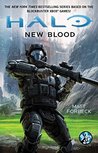
Review: Halo: New Blood

Halo: New Blood
Halo: New Blood by Matt Forbeck
My rating: 5 of 5 stars

One of the best Halo novels I’ve read in a long time; maybe even my very favorite. It helps that it’s a story about one of Halo’s most likeable side characters: Sergeant Buck, originally from ODST, and now a squadmate in Halo 5. Buck is voiced and modeled by Nathan Fillion, an iconic figure to geeks everywhere and his character is basically a pitch-perfect translation of Malcolm Reynolds moved into the Halo universe. And it works perfectly.

Author Matt Forbeck either has the uncanny ability to mimic those around him, or he binged on Firefly episodes and Fillion’s other work while writing this book. You can hear Fillion’s voice in these pages and it’s excellent. The story itself is very human and focuses on the themes that make the Halo universe the most compelling: duty, identity, loyalty.

The story is told out of sequence, which is interesting as it creates a strong sense for how Buck (the main character and narrator of the story) thinks. We get a quick recap of the plotline of ODST, which is interesting, check in with some old comrades (which is interesting and also heartbreaking), and see how exactly Buck transitioned from ODST to Spartan-IV.

The best aspect of this story, however, is that it succeeds where almost all franchise tie-in novels fail: you don’t have to be a Halo fan to enjoy this book. It stands on its own; if you’ve never played a Halo game, you can still enjoy this story. It doesn’t rely on the reader having a degree in its own lore; if you’ve never played a Halo game, you’ll understand the difference between ODSTs (elite, but thoroughly human) and Spartans (human supersoldiers) and even the different classes of Spartans.

Most of all, it’s a human, character driven story. The ending, which I won’t spoil here, really did catch me off guard and caught me right in the feels. That’s a rare achievement for most books focused on space wars and future soldiers, let alone a video game novel.

View all my reviews