Review: Tomb Raider Volume 3: Queen of Serpents

Tomb Raider Volume 3: Queen of SerpentsTomb Raider Volume 3: Queen of Serpents by Rhianna Pratchett
My rating: 4 of 5 stars

I continue to be impressed with the comic series since Rhianna Pratchett took over the writing. It should come as no surprise, as she’s the main writer for the new Tomb Raider games, so it makes sense she keeps the storytelling smooth and seamless between graphic novel and game.

I like that this volume focuses on the deteriorating relationship between Lara and the “normal world” as a result of her experiences. One of the best moments of the 2013 Tomb Raider game was Lara’s horrified reaction to her first human kill; it was a deeply traumatizing and emotional moment and an excellent piece of storytelling. Eventually, the needs of the game mean you’re mowing down enemy mooks with all the concern of a video game character (which is to say, none), but that’s the result of it being an action game.

Here we see that Lara’s experiences continue to evolve her as a character. She’s trying to stay connected to the normal world despite the fact that she’s done and seen things that make her more and more removed from it. It sets things up nicely for why she’s continued to, ah, tomb raid and put herself in dangerous situations despite no longer being trapped on the island from the first game.

A very solid read for anyone hungry for more adventures with Lara. If you have a chance to read this one before going into Rise of the Tomb Raider, I recommend it, but even if you’ve already played Rise, Queen of Serpents is a fun, well written graphic novel that manages to have some surprising emotional depth. I quite enjoyed it.

View all my reviews

Review: The End of Nature

The End of NatureThe End of Nature by Bill McKibben
My rating: 5 of 5 stars

There are more comprehensive books about climate change out there. There are books with facts and models and hard science. There are scarier books, too, with more dire predictions about what will happen. It might seem hard to imagine what this little book’s niche actually is, its role in the ecologist’s reading canon, until you remember that it was written in 1989. It was written years before an Inconvenient Truth, years before Gore, years before Bush dismantled the Kyoto Protocol, and years before the age of global terrorism. It was a time when “global warming” was still more often referred to “the greenhouse effect.” This book was written in an entirely different era.

And for that reason alone, I feel it is required reading.

As author Bill McKibben notes in his new introduction (itself now ten years old, having been written in 2005), this book is a product of its time. It is uneven in places, alternating wildly between talking about the facts of global climate change and more poetic musings on the nature of, well, nature and humanity’s role within it. And yet it’s undeniably fascinating to look back on the state of environmentalism in the late 1980s and compare its predictions to what has happened in the almost 30 years since then. Unfortunately, there’s a strong feeling that we’ve been asleep at the wheel for too long. We knew about this stuff in the 1980s! How the hell did we late it get this bad?

And yet we’ve also seen some victories: Keystone XL, of which the author himself was a leading protester. Everyone knows about climate change now, even if many deny it. We’ve come along way from the fringe environmental movement, when this book was written. We still have a long way to go and it’s easy to feel despair, especially after seeing what we knew in 1989. Nevertheless, this book is a testament to environmentalism’s history and for that reason alone, it’s worth reading. Beyond that importance, it’s still a good read on its own merits; the idea of the end of nature might more accurately be described as the “end of wildness,” the end of nature as an untouched force, and regardless of whether or not you agree with the argument, it’s still interesting to consider.

View all my reviews

Review: Snowden

SnowdenSnowden by Ted Rall
My rating: 2 of 5 stars

It’s always hard to get a decent review on a book about such a divisive figure, simply because there will be a sizable contingent that will rate based on their feelings about the subject (for or against) rather than the merits of the work itself. With that said, I’d like to note that I’m generally pretty pro-Snowden. I’ve read a few other books about him and I think the revelation of the extent of the surveillance state was an important one.

But this isn’t the book to get a deep or nuanced understanding about the Snowden leaks. Here, we have Snowden the superhero, Snowden the caricature. Snowden is depicted as unambiguously good, while politicians like Obama, Clinton, Feinstein, and others are evil schemers (Rand Paul is the only positively depicted politician, interestingly).

This isn’t a simple story of good guys and bad guys. It’s not black and white, though this book very much wishes you to think so. Snowden took personal responsibility! The most important thing is personal sovereignty! Seriously, I absolutely hate it when a book assumes that I’m too stupid to understand the important bits, so those important underlying messages need to be spelled out in bold text. Yeah, it’s a cartoon. Doesn’t mean you need to assume I don’t understand the big words.

I was left shaking my head and rolling my eyes, and again, this is from the perspective of being pro-Snowden coming into this book. I assume if you’re in the anti-Snowden camp, you probably couldn’t get through the book without bursting into flame, but that leads to an interesting question; who’s this book for? I didn’t buy into it and I’m actually in agreement with the author’s general premise!

Why did Snowden leak those secrets? This book argues it’s because he’s a fundamentally good person, the only person who spoke up whenever everyone was going along with the crowd. The word “sheeple” doesn’t show up in the text, but I can’t help but imagine previous drafts where it appeared several times.

It’s possible that the author is correct and Snowden did what he did out of patriotic duty and a sense of personal responsibility. Or maybe he had visions of fame and recognition, a hunger for a place in history. Maybe it was both of these things, or neither, or several others. Humans are complicated and messy creatures. We are, all of us, saints and sinners, fallen angels and rising apes. We do things for many, many reasons and I resist the urge to create simplistic heroes and caricatures of complex issues.

Snowden is important. His leaks are important. Discussions about the nature of surveillance are important. But they are not simple and I resist agreeing with any work that seeks to paint them as such. If you’re curious about Snowden’s story, this isn’t a book that I’d recommend, because even though I do agree with the core premise, I don’t buy into its depiction or execution.

View all my reviews

Review: Hatching Twitter: A True Story of Money, Power, Friendship, and Betrayal

Hatching Twitter: A True Story of Money, Power, Friendship, and BetrayalHatching Twitter: A True Story of Money, Power, Friendship, and Betrayal by Nick Bilton
My rating: 4 of 5 stars

A taut, well written, and gripping narrative about the rise of Twitter and the intrigue that led to a Game of Thrones-style power struggle, although without the head lopping. As a narrative, it’s excellent and excellently readable, although I can’t help but wonder about author Nick Bilton’s personal allegiance.

This is a story with pretty clearly defined heroes and villains and Jack Dorsey is definitely the book’s villain. He’s credited as having provided interviews which led to the writing of this book, although the author notes that not all interviews were necessarily happy to provide them. If he wasn’t displeased before, I can’t imagine he’d be happier now, because Bilton pulls no punches in how he depicts Dorsey as an egomaniac, a manipulator, and a Steve Jobs wannabe.

On the one hand, this is troubling; one expects such an account to be as neutral as possible. And while Ev (the other main player in the Twitter power struggle) has his own flaws, they’re usually not depicted as severely as Jack’s. It’s possible that these two men really are that different, but it still feels like we’re meant to root for Ev and feel hurt by the betrayal that ousts him from his own company. So does the work succeed, even though it doesn’t feel neutral?

On the other hand, this book is written really, really well. It’s a hell of a tale and it’s a rare talent that can turn board room politicking into exciting drama. The emotional content of the book is above and beyond any other “corporate narrative” I can recall; this book is many things, but it’s not dry. It is a quintessential ‘can’t-put-it-down’ read.

My personal recommendation? If you’re reading this to make a judgment about Jack Dorsey’s personal character, or if you’re, say, writing a research paper about Twitter . . . I’d hesitate to consider this one a source. My feeling coming away from the book is that there are two sides to every story and this book is only one side.

On the other hand, it’s damn fun, full of highs and lows, and it explains the genesis of Twitter perfectly; the early days of the Fail Whale, why the damn site crashed all the time, why it all felt like it was cobbled together with superglue and wishful thinking (because it really was), and all the other quirks that have become part of Twitter’s character and its charm. From the inability to actually explain what exactly Twitter is (even the creators disagree!) to its evolution from “What are you doing” to “What’s happening,” if you’re a Twitter user, this is a book you’ll want to pick up. Even if you’re a Twitter agnostic, or even just Tweet-curious, it’s a fine book of corporate narrative drama that delights and entertains.

View all my reviews

Review: Halo: Escalation (Volume Two)

Halo: Escalation (Volume 2)Halo: Escalation by Brian Reed
My rating: 4 of 5 stars

The Halo: Escalation series continues to impress. It’s everything a great tie-in graphic novel should be.

While most of volume two continues the adventures of the Spartan-IVs, a section of the book is devoted to a somewhat surprising face: the Master Chief himself and the Spartan-II Blue Team. I mention this as a surprise because it seems like, aside from a few early novels, the Halo universe seems to shy away from depicting the big MC in the expanded universe fiction, preferring instead to save his exploits for the games themselves. It’s nice to see Blue Team show up here, which I recognize is meant to prepare gamers for their appearance in Halo 5, but regardless, it’s still fun.

The Master Chief storyline is a very nice segue between Halo 4 and 5, dealing with the aftermath of Halo 4’s emotional ending. One thing that has continually struck me as odd is the Didact himself, however. Warning: spoilers for the comic and (possibly) Halo 5 to follow.

Still with me?

Halo 4 made it seem like the Didact was going to be a recurring antagonist; he definitely seemed “defeated, but not killed” at the end of that game. Which I’d thought would mean we’d see his big ugly mug again in Halo 5 . . . but Escalation makes it pretty clear that the Didact is done, since in this book, Blue Team hunts him down and kills him, and they kill him pretty decisively. I suppose it’s still possible we’ll see more of the Didact, but . . . it feels unlikely. I wonder if he wasn’t as well received as 343 was hoping and so they steered away from him in favor of other villains in Halo 5.

Back to Escalation itself; although the Master Chief storyline is the standout here, the rest of the book is quite good. There’s a good balance of world building that I enjoy and the work that’s gone into the Spartan-IVs really shows. Ray and Thorne are back and even Palmer’s characterization has smoothed out from her rocky start in a previous graphic novel. Despite how good it was to see the Chief in a book, it also reminds one that the universe is much, much larger than just the Chief. I appreciate that.

Final verdict: good stories, good art, good pick for a Halo fan. I’m happy to recommend this one.

View all my reviews

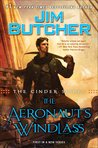
Review: The Aeronaut’s Windlass

The Aeronaut's Windlass (The Cinder Spires, #1)The Aeronaut’s Windlass by Jim Butcher
My rating: 3 of 5 stars

Man, I wanted to love this one. I was ready to love it. I was prepared for it. Consider the background context: Jim Butcher absolutely dominates my list of “Most Read Authors” at a lofty 26 books. I’ve read almost everything that’s flowed forth from his pen and I use the word “flowed” in the most enthusiastic and positive sense: the summer I was introduced to Dresden was a reading feast as I plowed through eleven books with complete abandon. I still remember where I was when reading “Summer Knight,” for instance (I was camping on a beautiful mountain in southern Arizona, if you’re curious).

I remember picking up the Codex Alera books and being skeptical at first, but Tavi’s story drew me in and to this day, I consider the entire Alera series Butcher’s most underrated masterpiece. Alera showed me that I don’t need urban fantasy and wisecracking wizard detectives to enjoy his work.

I started this book in January. It proved to be slow going for me. I’d read a bit and I’d enjoy myself . . . but there was no hook. I’d put the book down for a few days and a week or two would go by as I read something else. I tried changing things up by going with the audiobook version during my walk to work each day . . . but more often than not, I went with a podcast instead. Eventually, I returned to the physical version of the book, mostly so I could finish.

Where do things go awry? The meeting with the Spirearch felt like a poor version of the First Lord from the Alera series and my feeling was the entire thing about “I can’t trust my guard because maybe traitors” was contrived to explain why these untrained kids were being sent off on an important mission.

For how prominently the aeronauts and the ship Predator featured in the title and the opening chapter, it’s quite surprising how little the airships actually figure into the book. Predator spends most of the story docked, with the action on “land” as it were. This was unfortunate, because the Predator and the airships were the most interesting and exciting aspect of the world. The battle at the end is suitably thrilling, but it’s such a small section of the book that by the time it rolled around, I’d be working slowly through the book for almost two months.

Also, the title bothers me. My understanding is that a windlass (in this universe’s context) is basically a barge or a ship that’s slow and weak. But Grimm (the presumed aeronaut in question) never has his ship turned into a windlass, so . . . where exactly is the windlass referred to in the title?

Other problems with the plot included the sudden and abrupt disappearance of the main antagonist, to the extent that I went back and reread a few chapters to make sure I didn’t miss a brief mention of the antagonist’s demise. Turns out, that wasn’t the case and the last few pages show that the antagonist managed to escape.

It was hard to tell whose story this was. Characters move around and disappear for long enough stretches of time that I can’t comfortably saw that it’s Grimm’s story, or Gwen’s. Maybe it’s really Bridget’s? But even she isn’t there for the finale, so who knows.

I’m almost 100% certain I can figure out the identity of the mysterious Enemy. Possible spoiler warnings, although I’m really just speculating wildly: considering the use of the word “unmake,” who’s willing to bet that the giant robot-thing is actually one of these deific Builders and that the oft-invoked “merciful Builders” aren’t quite so merciful after all?

I’m not a steampunk fan, so I can’t attest to how well (or not) this book will fare with fans of the genre. I’ve long been of the opinion that good writing will work regardless of genre and that good stories don’t need to rely on the genre conventions to be good, that the conventions are just fun embellishments or a form of adornment. Thus, I don’t consider my lack of familiarity with steampunk to indicate that “the book wasn’t for me” or “I just didn’t get it.” Hardcore steampunk fans may find otherwise, but that’s there business.

So, in the end, I’m left with a book that I picked through for two months. There are some good bits here, even some great bits; the airships and the chase at the end immediately made me want to go pick up a book about Victorian Era naval combat. You can see the familiar Butcher magic, you can grasp the pieces and see how they could come together to tell an epic story. But those pieces don’t come together here. It’s hard to see the characters as more than their archetypes: stoic captain, mad wizard, feisty aristocrat girl, etc.

I’m not going to write off the series yet. I recall how it took until the third Dresden book before I felt that the author had really hit his stride and found the magic, and so I’m willing to give the next adventure a look when it comes out. I think there’s potential. I don’t hate it when a beloved author works on other projects or other worlds. But on its own merits, I don’t feel the the aeronauts are taking flight and so we’re left with a book that’s merely okay. I liked it well enough, but I didn’t love it.

View all my reviews

Review: The Witcher: House of Glass

The Witcher: House of GlassThe Witcher: House of Glass by Paul Tobin
My rating: 3 of 5 stars

I’ve been completely sucked into the world of the Witcher since I started playing the third Witcher game a few months ago. Since then, I’ve tried to read everything I can to get familiarized with Geralt’s world and while I know there’s a series of novels waiting for me, this ended up being the first book that I’ve been able to read.

As video game graphic novels go, it’s okay. The story sagged somewhat in the middle and there were some basic assumptions about a certain character that I thought were going to be a plot twist, but ended up as something totally benign. Geralt certainly seems to have far more angst here than in the game and the continued self-references to “I’m a witcher, I don’t…” or “the witcher’s path is a lonely one” ended up getting a bit repetitive.

The art style was pretty cool, however, and there are some enjoyable moments. While the twist that I predicted ended up being completely wrong, there’s a pretty good reveal towards the end. Overall, though, I kept asking myself “why the hell would a master monster hunter allow himself to spend so much time in an obviously evil place?” Despite the fact that the titular House of Glass was full of cursed monsters and strange magic, Geralt didn’t seem to really mind that fact.

Final verdict: a fun, well illustrated graphic novel but somewhat underwhelming for my first foray into Witcher fiction, although the fact that this graphic novel appears to be a tie-in work to the game rather than the original novels might have something to do with that.

View all my reviews

Review: And Yet . . .

And Yet ...And Yet … by Christopher Hitchens
My rating: 4 of 5 stars

I don’t always agree with Hitchens’ views. In fact, I don’t think I even often agree with them. Despite a brief flirtation with the New Atheists a few years ago, I’m unwilling to consider myself more than a spiritual agnostic. I disagree with his embrace of war and military intervenionism. And yet. And yet.

Hitchens was one of the best goddamned writers of . . . possibly ever. Even when I completely disagree with his thesis, he’s delightfully readable. And I don’t disagree on everything. His more wry observations of life and culture and literature are a true delight and one comes away from a good Hitchens essay with the feeling of shared a drink with a brilliant and eloquent intellectual.

Of this final collection of essays, book reviews, and other short pieces, I will say this; I’m going to miss that voice. His thoughts on quitting smoking, getting healthy, and doing the physical makeover are bittersweet and poignant, the words given an unintended emotional gravitas when you consider how closely they were written before his own death.

This is more of a ‘completionist’ work of Hitchens writing than a ode to ‘the best of the best.’ Book reviews from books that are ten or more years old tend to feel dated, even for books that are remarkable. There isn’t really a true standout piece here and if you were new to Hitchens, this isn’t where I’d start. Despite that, there also isn’t anything that falls flat and nothing that isn’t interesting. It was nice to spend a little more time with a voice that I have missed and will miss. Overall, a very solid collection.

View all my reviews

Review: World of Warcraft and Philosophy: Wrath of the Philosopher King

World of Warcraft and Philosophy: Wrath of the Philosopher KingWorld of Warcraft and Philosophy: Wrath of the Philosopher King by Luke Cuddy
My rating: 4 of 5 stars

I picked this book up after a friend recommended it to me in the wake of my review of “Halo and Philosophy: Intellect Evolved.” While I think this concludes my foray into pop culture philosophy for a while, I did enjoy this book considerably more than “Halo Philosophy.” The nature of MMOs as shared simulated spaces (alliteration intentional!) invites several intriguing discussions, especially with regards to the metaphysical. Furthermore, so much of what makes MMOs interesting is the people that play them, and even though a first person game like Halo is also multiplayer, it’s really in the MMO space that one can seriously consider questions of character, identity, and self.

As you might expect, not every essay in this book is going to impress, but there are some true gems. In particular, the essays on the relationship between the character and the self really intrigued me. I’ve played a wide variety of characters over the year, including characters of an opposite gender. Thus, I paid particularly close attention to the essay written by a male player who, rather unintentionally, “toured” as a perceived female gamer for several months.

Is this a book I’d recommend to a non-WoW player? Eh, probably not. The authors generally do a good job of not relying “too” heavily on the game terms, but the largest appeal of these pop culture/philosophy books is how the content of your favorite game (or show, or movie, or whatever) can become the fuel for a philosophical discussion. If you’re not already a WoW player, I’m not sure why you’d be interested in picking up a book about it. That said, this is a very solid philosophy primer and if you’re an MMO player (of any game, really), you’ll find something to mentally gnaw on.

Quick aside: it was a little silly, but I really enjoyed the chapters presented in WoW’s “0/1” quest tracker style, as well as the “+3 to intellect” for completing the chapter. It was a fun bit of attention to detail.

View all my reviews

Review: Purity

PurityPurity by Jonathan Franzen

My rating: 4 of 5 stars

It was so very difficult to decide what to rate this book. Rarely has a book character just flat out irritated me so much . . . but irritated in a way that compelled me to keep reading. (For what it’s worth, I’m referring not to Purity, the main character, but Anabel, who shows up in one of the branching narratives. Purity herself was okay.)

This is often my experience with Franzen’s writing. Can I say that I really liked this book? If I didn’t like it, why couldn’t I put it down? Why did I race to finish it when my library’s due date edged closer? I’m convinced that this is indicative of a subtle talent and a prodigious skill, that I just. Kept. Reading. It’s still incredibly hard to know how to describe that feeling or even if I’d recommend the book. “I didn’t enjoy my time and yes, I was reading for pleasure, but it’s still a really good book?”

The story itself is classic Franzen, a world full of deeply flawed people. Purity herself breaks the mold from previous Franzen protagonists in that she’s actually a pretty likable person and her story is deeply compelling. The woven narrative between multiple characters creates a complex approach that I really enjoyed.

This book’s deepest flaw (aside from Anabel, who just drove me crazy with every page) is at that a book with sex and sexuality as a core theme, it’s a very unsexy book. I’m not sure if this is Franzen’s own writing style, if it’s intentional, or it’s due to the creepy Lolita vibe throughout the work, but I found myself skimming whenever clothes started coming off. Fortunately, that’s only a small percentage of the total book, so it wasn’t too much of a distraction.

I did roll my eyes at the line about how “Jonathan” just sounds like the name of a great writer. Really? Reeeeally?

And so we’re left with a flawed book that annoyed me more than almost anything I’ve ever read for my own enjoyment, but that I still read compulsively and could not put down. I don’t know what to make of that. I’m convinced that it means this work is brilliant. But it’s a weird place to be, mentally, and it makes for a hilariously awful blurb on the dust jacket.

View all my reviews