Review: Mass Effect: Homeworlds

Mass Effect: Homeworlds
Mass Effect: Homeworlds by Mac Walters

My rating: 4 of 5 stars

After the last few forays into the Mass Effect comic series, I’d started to wonder if they weren’t for me. I’m happy to say that Homeworlds, the fourth entry in the series, is an excellent change of course and gets things moving in a direction that I really enjoyed.

We get some backstory scenes for four of Mass Effect 3’s crewmembers: James Vega, Tali, Garrus, and Liara. It was interesting to see how the game universe handles the incredibly deep number of choices, as depending on how you played through Mass Effect 2, it’s possible that up to two of these characters will be gone by the time Mass Effect 3 starts. The story handles it by varying where in the narrative they take place: one is pre-ME 1, one is pre-ME2, and the others are just before ME3. I won’t specify which are which, to avoid spoilers.

It’s great getting to spend time with these characters. The crew members are my (and I imagine most players’) favorite aspect of the Mass Effect universe. It’s fun getting to spend some time with them and to see them operating on their own, outside of the long shadow cast by Commander Shepard (your player character).

There’s so much going on here, however, that it’d be almost impossible for a non-game fan to piece together what’s happening. Normally, that kind of thing rubs me the wrong way; my rule of thumb is that a video game story should be able to stand on its own. But it was so much fun getting to reconnect with a few of my favorites and I enjoyed the stories so much that I’m willing to overlook it.

View all my reviews

Review: North Korea Confidential: Private Markets, Fashion Trends, Prison Camps, Dissenters and Defectors

North Korea Confidential: Private Markets, Fashion Trends, Prison Camps, Dissenters and Defectors
North Korea Confidential: Private Markets, Fashion Trends, Prison Camps, Dissenters and Defectors by Daniel Tudor

My rating: 4 of 5 stars

Just the facts here, ma’am. Despite its slim size, author Daniel Tudor manages to pack in a lot of details about contemporary life in North Korea as the regime under dictator Kim Jong Un begins to reveal itself from the shadows of his father. Which isn’t to say that this new dictator is better than the previous one (the Kim is dead, long live the Kim, as they say), but it’s an updated look at the world, similar to how Barbara Demick’s seminal work “Nothing to Envy” showed life under Kim Il Sung.

Tudor’s book is considerably more academic than Demick’s, with more of a look from a top-down overview perspective rather than an individually focused narrative.

One thing that troubled me through the first half of the book was a sense of neutrality towards the regime, as though Tudor didn’t want to take a stance on the issue of North Korean human rights violations. Fortunately, that feeling was more a creation by the structure of the book, since the early chapters are more focused on the lives of average citizens. Tudor has plenty to say about the regime when it comes to discussing the political camps and the high-level purge of officials when Kim Jong Un succeeded his father.

This book is good for the academically interested or as a follow-up if you want to further your knowledge after reading a gripping defection memoir. It’s not going to go after your heartstrings in the same way, but that’s not its goal. This look at the lives of North Koreans in the modern day is, above all else, a reminder that these are real people we’re reading about, real lives we’re discussing from the ivory towers on our distant shores, and not cartoon characters in any sense, no matter how much mass media likes to say otherwise whenever North Korea declares it has discovered unicorns or cured hangovers.

View all my reviews

Review: Halo and Philosophy: Intellect Evolved

Halo and Philosophy: Intellect Evolved
Halo and Philosophy: Intellect Evolved by Luke Cuddy

My rating: 3 of 5 stars

While I knew this one was going to be a pop approach to philosophy, being about an FPS video game franchise like Halo, I was hoping that its discussions would be more focused on the lore behind Halo itself. We are, after all, talking about a franchise that was first introduced in a mysterious email chain that quoted T. S. Eliot. The Halo universe can be pretty mythic and deep when it wants to be.

Although a few of the essays do approach Halo from a lore perspective, the majority are more concerned with the philosophical implications and considerations of the actual Halo gameplay. For me, this was somewhat less riveting. There are a few interesting discussions, but overall, my general feeling towards these sorts of arguments is a sort of inward eye rolling. I’m reminded of my philosophy undergraduate days and how my peers could turn absolutely anything into a philosophical debate, even things that seemed rather pointless. This might be indicative that I wasn’t really cut out to be a philosopher, but as this is my review, I’m free to hold to it. But I digress.

The most redeeming aspect of this book is the fact that it’s indicative of the overall progress video games have made as a medium; that we’d ever have a book discussing Halo and philosophy is a sign of progress. That said, I remain skeptical that one can really glean any deep philosophical insight from playing Halo multiplayer. The attempts to bolt things like Leibniz’s “best of all possible worlds” argument onto a Halo deathmatch feel more like an attempt to play to the reluctant reader category, the sort of person that might be enticed towards philosophy if it comes in a tasty Halo-flavored coating. But even for reluctant readers, there are other books I would recommend instead; “Sophie’s World,” in particular, which was the book that hooked me many years ago.

Overall, we’re left with a somewhat interesting book. It doesn’t do anything wrong, but it also doesn’t manage to really excel. The arguments here aren’t going to surprise a dedicated philosophy reader (some are telegraphed enough that you’ll be able to predict them). And while I did like it enough to finish it, I’m not sure to whom I’d recommend this book. Three stars.

View all my reviews

Review: The Girl with Seven Names: A North Korean Defector’s Story

The Girl with Seven Names: A North Korean Defector’s Story
The Girl with Seven Names: A North Korean Defector’s Story by Hyeonseo Lee

My rating: 5 of 5 stars

I haven’t picked up a North Korean defector memoir in a while, so I was pleased to see this one getting high marks and a heap of praise from my fiancee before I started. Even though this is my 10th or 11th defection account, it continues to fascinate me how each one, despite having a few similar milestones (crossing the border into China, trying to blend in, and eventually making it to permanent sanctuary) still manage to be as unique and intricate as the people experiencing them.

Hyeonseo’s story is markedly different from the many other accounts of people pushed to such desperation that defection was the only remaining option. One could almost call her an accidental defector, in that she made it to China originally just to see it for a few days before returning home. But once she was there, circumstances made it so that there was no going back and from then on, she had to negotiate the fallout of that decision.

There are three aspects of this book in particular that make it supremely compelling; the first is that Hyeonseo makes no secret that she came from a life of relative privilege compared to many other defectors. (Privilege, of course, being a relative term compared to Western lifestyles). Second, most of the story is focused on what happens to her after crossing the border; her attempts to integrate into China and eventually, her attempts to bring her family across the border as well. It’s fascinating to see what it’s like for those on the other side, who worry and wait and negotiate and risk so much to help those trying to cross.

Finally, Hyeonseo’s writing style is superb. Her story is told with a taut, gripping pace and has enough cliffhanger chapters and twists of fate that you (and I hate using this phrase, but it really is the most applicable) “can’t put this book down.” There’s an energy and pace to this story that crackles like a great thriller novel, but the fact that this isn’t a story, that this all happened to a real person makes it that much more compelling.

I’ve read a lot of North Korea defector memoirs and I’ll doubtless read many more until this humanitarian crisis is resolved (hopefully within my lifetime). Each one is remarkable in its way, but there are a few that stand out as books that I feel everyone should read. I’m happy to say that “the Girl with Seven Names” deserves a place in those ranks. You should read this book.

View all my reviews

Review: Mass Effect: Invasion

Mass Effect: Invasion
Mass Effect: Invasion by Mac Walters
My rating: 3 of 5 stars

The Mass Effect graphic novels continue to be interesting, though like book two of the series, I don’t feel like this book is essential reading. The first book set an incredibly high bar with its focus on what happened to Commander Shepard between the prologue of Mass Effect 2 and the main story. It also focused on Liara, one of my favorite characters, and it was just a great story to boot.

This book focuses on Aria and how she lost control of Omega Station, which is something that becomes a sidequest focus in Mass Effect 3. And while Aria herself is an interesting character, the line this story has to follow is basically a tightrope. There’s very little room for deviation. We know Aria’s going to lose the station. We know we’ll help her take it back. It makes it hard to really feel invested in the struggle. This might also be due to a general ‘meh’ feeling that I have towards Omega itself as a plotline, as the Omega downloadable content (DLC) missions were fairly lackluster.

Still, although this book doesn’t excel, it’s good as a straight-up comic book tale of kicking ass and cool battle art. I really love how biotics are depicted in the comics; even with the hard sci-fi approach that the Mass Effect universe takes, biotics are shown as these incredibly cool space wizards. It’s also been one of my laments about the game narrative, that it can’t be more of a plot point if my Commander Shepard is a biotic (which he always is).

In conclusion, we have a solid, serviceable story, but one that won’t go on to impress. It doesn’t meet the high bar set by its first predecessor, but there’s nothing here that’s absolutely wrong either, the way the novel “Mass Effect: Deception” was so horrifically flawed. That’s one of the fascinating things about the Mass Effect story universe; its tie-in materials have ranged from the amazing to the awful. “Invasion” falls solidly in the middle, and so I don’t mind telling diehard Mass Effect lore aficionados to give it a look even as I tell more casual fans that they’re safe giving this one a pass.

View all my reviews

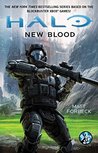
Review: Halo: New Blood

Halo: New Blood
Halo: New Blood by Matt Forbeck
My rating: 5 of 5 stars

One of the best Halo novels I’ve read in a long time; maybe even my very favorite. It helps that it’s a story about one of Halo’s most likeable side characters: Sergeant Buck, originally from ODST, and now a squadmate in Halo 5. Buck is voiced and modeled by Nathan Fillion, an iconic figure to geeks everywhere and his character is basically a pitch-perfect translation of Malcolm Reynolds moved into the Halo universe. And it works perfectly.

Author Matt Forbeck either has the uncanny ability to mimic those around him, or he binged on Firefly episodes and Fillion’s other work while writing this book. You can hear Fillion’s voice in these pages and it’s excellent. The story itself is very human and focuses on the themes that make the Halo universe the most compelling: duty, identity, loyalty.

The story is told out of sequence, which is interesting as it creates a strong sense for how Buck (the main character and narrator of the story) thinks. We get a quick recap of the plotline of ODST, which is interesting, check in with some old comrades (which is interesting and also heartbreaking), and see how exactly Buck transitioned from ODST to Spartan-IV.

The best aspect of this story, however, is that it succeeds where almost all franchise tie-in novels fail: you don’t have to be a Halo fan to enjoy this book. It stands on its own; if you’ve never played a Halo game, you can still enjoy this story. It doesn’t rely on the reader having a degree in its own lore; if you’ve never played a Halo game, you’ll understand the difference between ODSTs (elite, but thoroughly human) and Spartans (human supersoldiers) and even the different classes of Spartans.

Most of all, it’s a human, character driven story. The ending, which I won’t spoil here, really did catch me off guard and caught me right in the feels. That’s a rare achievement for most books focused on space wars and future soldiers, let alone a video game novel.

View all my reviews

Star Wars: The Force Awakens and My Thoughts Which Might Be Spoilers If You Haven’t Seen It Yet

I saw The Force Awakens for my birthday (December 24) and now that I’ve had a few days to digest and think about it, I’m ready to render a poorly organized list containing my thoughts in no particular order. I’m not planning on revealing any major details or plot twists, but the rest of the post will be hidden by a jump, just in case, as I will be talking about the characters and their personalities.

If you haven’t seen it yet, probably best to move along and come back when you have.

Spoiler warning.

With that said . . .

Continue reading “Star Wars: The Force Awakens and My Thoughts Which Might Be Spoilers If You Haven’t Seen It Yet”

Thoughts On The 2013 Z1000

Last week, I brought this lovely little lady home with me. Meet Zoey, my new 2013 Kawasaki Z1000:Image

I thought about writing a post about my new ride as soon as I received it, but I realized that I wouldn’t have much to say with only a single ride home from the dealer under my belt. Well, now that I’ve had this motorcycle for over a week and I’ve already put over 400 miles on it, I think I can talk more about it.

My previous ride was a 2005 Ninja 500, so this jump from a 500 cc engine to a 1000 cc engine (actually 1043 cc, if we’re being picky) is a pretty big one. The Z is quick; really, really quick. It’s quick off the throttle, it’s quick to get up to speed. Everything about it is just that fast. It’s awesome.

I went with the 2013 model over the new 2014 Z1000 for two reasons. First, I wasn’t crazy about the price increase; the 2013 Z’s MSRP was $10,500, while the 2014 is about $2000 more. Since this was last year’s model, I was able to pick it up at a really, really nice price, which was a big bonus. Furthermore, I really don’t like the look of the 2014. I think the gun-metal grey with the green accents just isn’t as striking as the 2013’s full metallic blazed green paint job. Seriously, this thing sparkles in the sunlight. It’s very striking.

My favorite thing about the Z1000 is the upright riding position. I’d already gotten used to sitting upright on a bike since the Ninja 500 has a very upright posture considering its sport bike class. I’ve been on a few other sport bikes with more aggressive, over-the-tank postures and I didn’t care for it. The Z’s seat is really comfortable and it’s nice to sit upright on the thing. It certainly makes tooling around town more comfortable.

The puny windshield means that the wind above about 80 mph gets pretty intense. To be honest, I didn’t realize that the little windshield on the Ninja 500 was doing that much to deflect wind, but the difference is noticeable. I don’t mind the wind, honestly, although it’s a bit of an upper arm workout to hold on at speed, it’s not unbearable. Also, it really adds to the feeling of going Warp Nine when you’re really moving.

Really, I love everything about this bike. Whenever I think about it or someone asks me about my new ride, I get an absolutely ridiculous grin on my face. Riders will often talk about “smiles per mile” as a metric for value when it comes to their rides. In that regard, I think I’m getting my money’s worth, many times over.

Gravity

A message posted to Twitter earlier today: “I’m thinking tonight should be a movie night. Been wanting to see Gravity. Anybody interested in joining me?”

It doesn’t seem like much, just one more social invitation in a digital world that is already overflowing with events, shares, likes, and retweets. And yet it was also something else; to me, it was the attempt to continue a small, personal tradition that had gone unbroken for as long as I can remember. That tradition was this: I never go to the movie theater alone.

I’ve gone to restaurants alone. Bars. Museums. Hikes. Motorcycle rides. So many things. I am an introvert, no matter what my ability to be both loud and gregarious may indicate otherwise. Being alone is my preference most of the time. It’s easier to think when you’re alone.

Movies, however.

There was something about going to the movies that seemed to me a requirement that it be a social event. Part of it was habit; I have a little brother, which means that until a certain age, you always go to the movies with somebody else. Later on, it was one girlfriend or another, because going to movies was what one did on dates, especially in the age before legal drinking was an option.

Even after that, there are so many movies that encourage going with friends. With a comedy, it’s practically a requirement, but even a good epic sci fi or fantasy film is better when viewed with a friend.

I think it was the social component of going to a movie that made it different than watching a DVD. After the movie, there was drinks at a nearby pub or bar. There was a discussion of the movie, assuming it had enough content worth discussing. If not, there was other discussion.

My tweet was an attempt to continue a tradition. It didn’t work. If tonight was to be a “movie night” and not a “Netflix-or-Red-Box” night, I would be breaking my little streak and going it solo.

I’m glad that I did.

Gravity is a movie about being alone. It’s a movie about the powerful inexorability of the most fundamental forces of life and how they absolutely do not give a shit about our existence. Momentum doesn’t care about us. Newton’s laws don’t care about us. You get the idea. Human desire and will doesn’t matter. In space, there is only the ironclad certainty of physics.

Unless (tiny spoiler warning) you’re clever enough to bring Chekov’s gun, or in this case, Chekov’s fire extinguisher. Then you can argue with physics a little bit.

Gravity is a beautiful movie. It may or may not be a satisfyingly feminist movie; our heroine requires rescue early on, although by the end, she’s taking care of herself. It didn’t feel particularly patriarchal to me. It felt real. Others may disagree, which is fair.

More than anything, though, Gravity is a movie about being alone. Alone in space. Alone, helpless, adrift. Sometimes life feels that way, too. Not always, but sometimes.

This is a movie to see by yourself. It’s a movie that you should think about on your way back to the car. On your drive home, without music or cell phone. It’s almost impossible to find silence in today’s world and yet silence is as much the core of Gravity’s theme as solitude and desolation are.

Gravity doesn’t lend itself well to a rousing post-theater discussion over beers at the bar. It’s a movie that needs time to think and reflect: on life, on the laws of the universe, and on being alone.

Is it worth seeing?

Yes, I believe it absolutely is, although keep in mind this endorsement is coming from a guy who loves 127 Hours and gets choked up on almost any survival story. In my opinion, however, it’s worth your time, though, and your consideration.

See it by yourself, if you can. I think it’ll be better that way. And if you feel the need to talk about it, as I do, maybe write it down. Even if it’s a blog post, writing is still the most lonely form of communication we have. For this, I think that’s fitting.

Jim Hines, Libriomancer, And Admitting That I Was Wrong

You’ll need a bit of background before diving into this post. About a year ago, I read Libriomancer by Jim Hines. It’s a fantasy novel about a librarian who has the ability to pull things out of books: lightsabers, laser guns, the One Ring (probably not a good idea), basically anything that can fit through a book’s dimensions. You’d think I would have loved such a book? Magical librarians? How can that not be awesome?

And, well, it was awesome, for the most part. For most of the book, I was engaged and reading with the sort of hungry pace I usually reserve for Jim Butcher’s work.

However, when I got to the end of the book, there was something that didn’t sit quite well with me and made me feel sufficiently weird that I ended up knocking my review down to four stars. Still a very, very good rating, but not that that sparkling five star I was feeling for most of the book.

Why did I do this? Well, there was this character in the book: Lena. She was a dryad who was created from a book. She was depicted as intensely sexual, beautiful in a non-traditional way (much more curvy than your typical rail-thin love interest) and in the end of the book, she and the main character ended up in a three way M/F/F relationship with Lena’s previous lover serving as the second F.

I admit, that all seemed weird to me. I admit that for all of my progressive thinking, for all that I support and believe that gays, lesbians, bisexuals, transgenders, should be free to love whomever they desire . . . the idea of this three person relationship felt odd to me. More than that, it felt exploitative. Everything about Lena’s character felt like it was catering to the author’s own personal kinks and tastes. This was just another fantasy author writing out his own personal fantasies. More powerful, sexy women that exist to serve male tastes. Sigh. I decided I wouldn’t read more in the series.

I was wrong. I was wrong about all of that.

Regular readers know that I’m a huge fan of John Scalzi. He’s in my personal geek pantheon; if he’s attending a convention, that’s a reason for me to want to attend that convention. I have signed copies of several of his books. I read his blog. I might have a mancrush on him. Okay, yes, I do have a mancrush on him.

He has a regular feature called The Big Idea where other authors can talk about their new books. Some of them are interesting, some of them aren’t to my taste, some of them have made me go out and get the book as quickly as possible. It’s a cool way for Scalzi to use his blog’s popularity to help other authors find an audience.

So today, a new Big Idea post goes up and it’s about the sequel to Libriomancer. Hmm, I think. Jim Hines. Oh, right, the book with the dryad and the three-way at the end.

But then I started reading. And when I was done reading, I realized that all my earlier impressions had been completely wrong. What I had taken to be more of the same fantasy exploitation of women was the complete opposite, was in fact a critique of those same exploitative depictions. I’m was like the kids in my high school lit class who were outraged when we read Jonathan Swift’s A Modest Proposal because they didn’t realize it was satire.

Hines isn’t one of those fantasy authors out there creating more fantasy women to cater to his own male gaze. He’s the opposite. He’s giving talks on sexism in fantasy and posing in sexy dresses to raise awareness for these gender issues. In short, he’s one of us. And I never even realized it.

Reading about what Hines is trying to do with his character, both in the new book and in the first one, made me go back and take a hard look at why I felt the way I did with Libriomancer. It made me wonder why the M/F/F relationship at the end bothered me. What I realized is that I’m not immune to feeling prejudice towards things I don’t understand and this was something I didn’t understand. I was reacting just as a homophobic individual would.

I’m sorry that I judged Hines and his book too quickly. I’m sorry that I didn’t think more critically about the book. But I’m glad, too, because this experience made me reconsider my own thoughts and examine a bit of prejudice I didn’t know I had.

And all of that is good, because it’s how I grow. It’s how I learn.

Jim Hines’ book made me learn and grow. It’s not his fault it took me almost a year to actually figure it all out.

I’ll definitely be picking up his new book when I get home. And I retroactively have added back Libriomancer’s long overdue fifth star.